A quest platform with a second loop.
One product for quests and collectibles
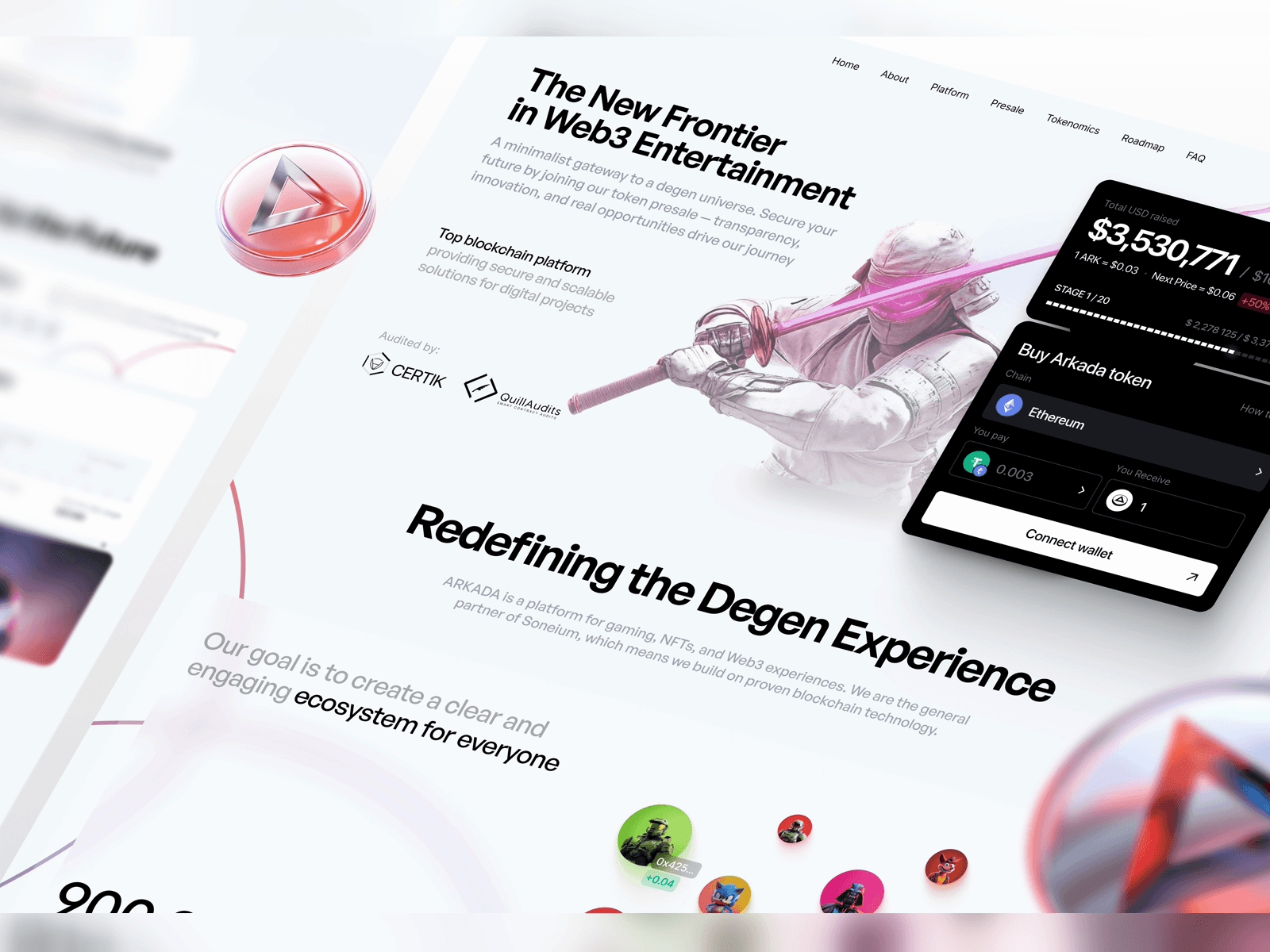
Arkada was building a Web3 quest platform while campaign traffic was already moving through the product. The platform needed to handle quests, points, rewards, leaderboards, profiles, partner campaigns, and a presale story without feeling like a generic crypto dashboard.
2025. Seven artifacts, each hand-modeled in 3D. A lore bible I wrote before touching any AI. A lighting direction lifted from a horror episode nobody watched. 30,000+ holders. Every piece sold out between February and September. In an industry built on generative randomness, we made everything by hand — and that was the point.
Traffic arrived before the system settled
The harder problem was positioning. Arkada had to feel close enough to Soneium to borrow ecosystem trust, but independent enough to keep its own visual identity.
The NFT universe added another layer. Artifacts, badges, maps, and campaign visuals had to connect back to user status and quest behavior, not live as a separate drop beside the product.
Why seven artifacts
Most NFT collections are a character design sheet fed through a combinatorial script — ten hairstyles, eight backgrounds, six accessories, shuffle, mint ten thousand. The creative work is the character. Everything after that is automation.
Arkada is seven unique 3D artifacts, each individually modeled, individually lit, individually animated, each placed in its own environment, each carrying a lore fragment that only makes narrative sense in relation to the other six, culminating in a burn mechanic where collecting and destroying all seven produces a single Super-NFT. No trait randomization. No generative shuffling. Every piece art-directed from scratch.
This is roughly fifty times more expensive and slower than the standard approach. In a market that optimized for volume, we optimized for depth. The case study isn’t about overcoming some dramatic obstacle — the project ran smoothly, the client was aligned, the timeline held. The case study is about why you’d choose to build something this way at all, and what becomes possible when you do.
Landing, app, profile, and rewards
One connected product surface
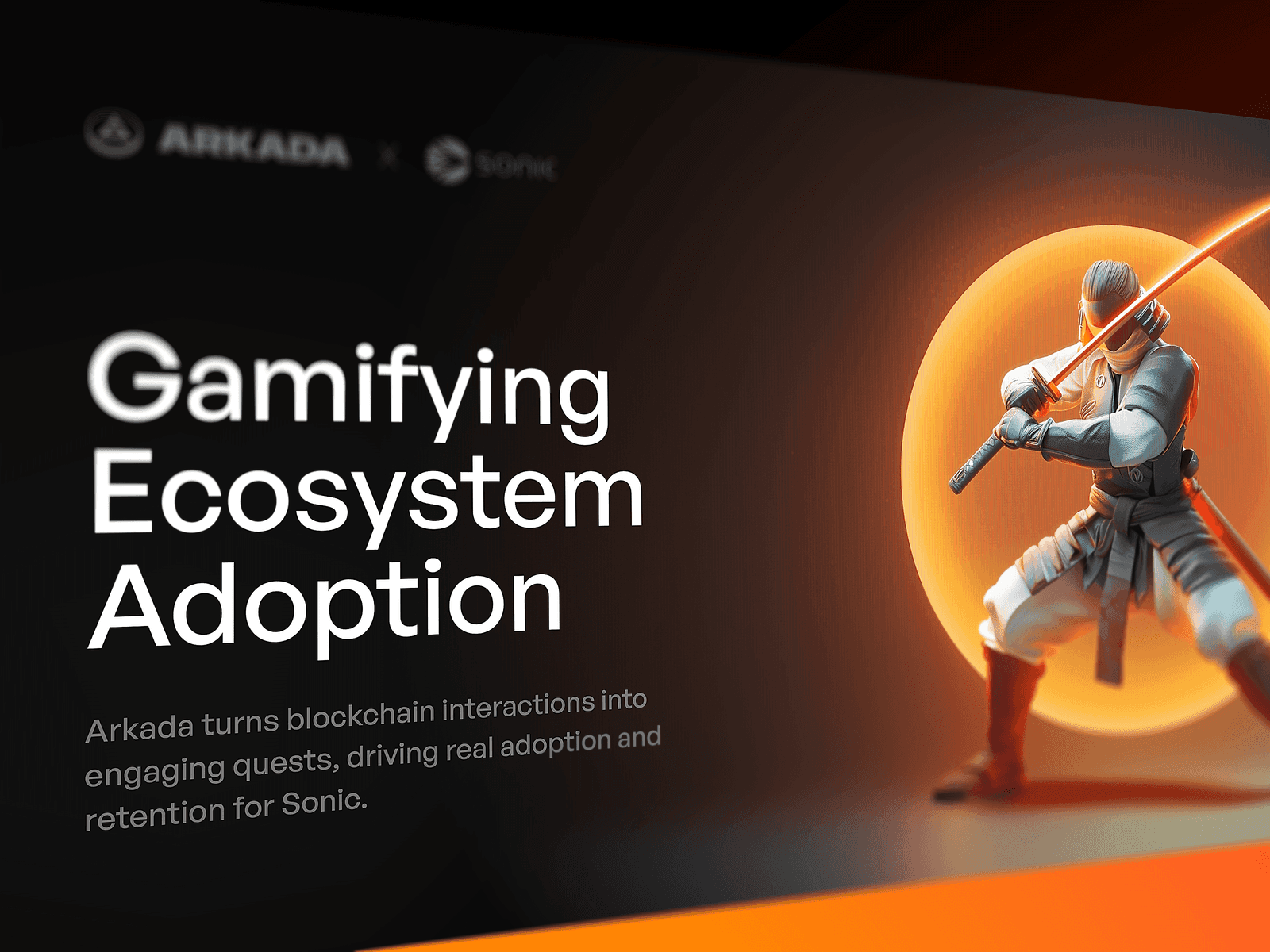
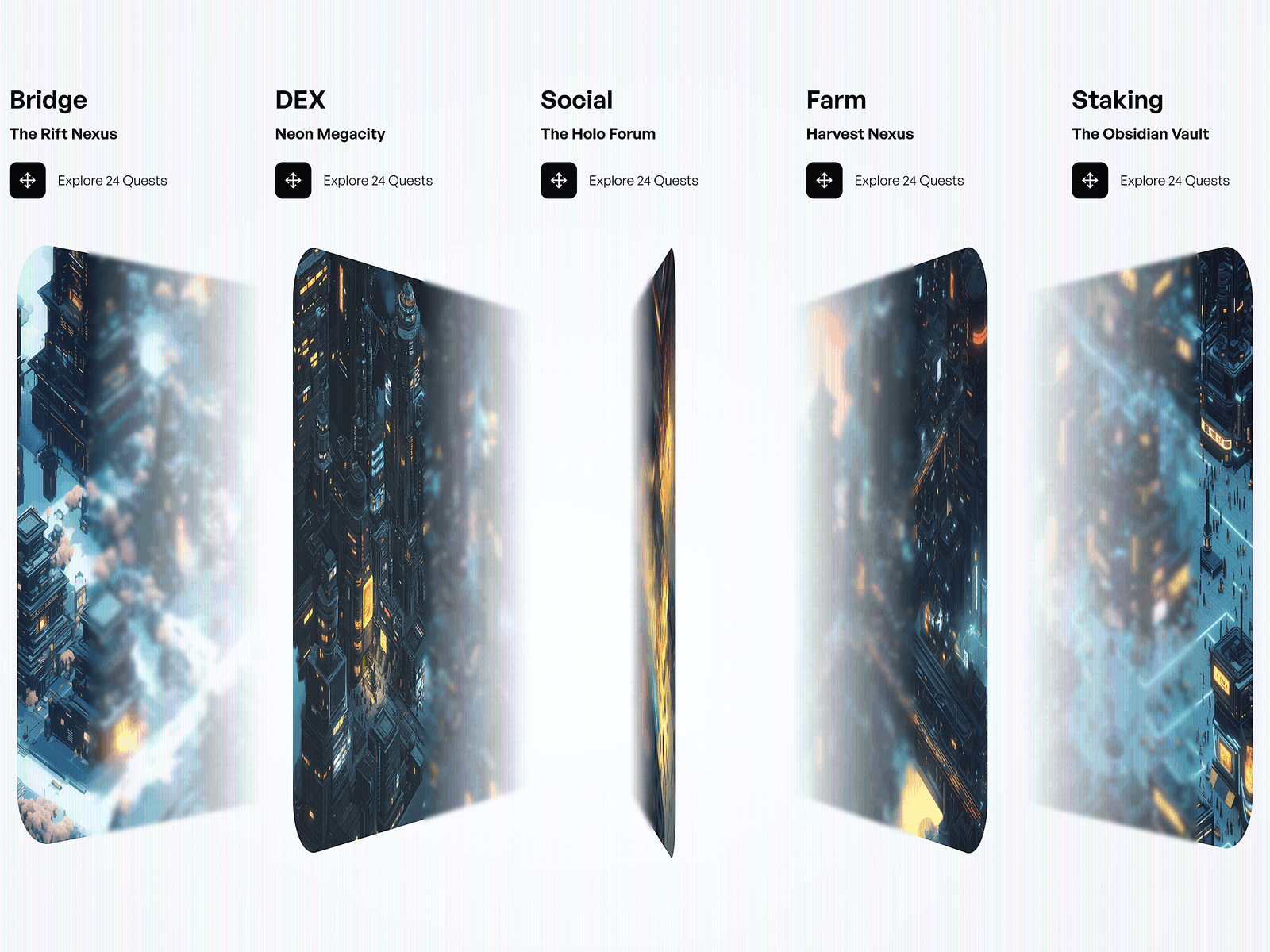
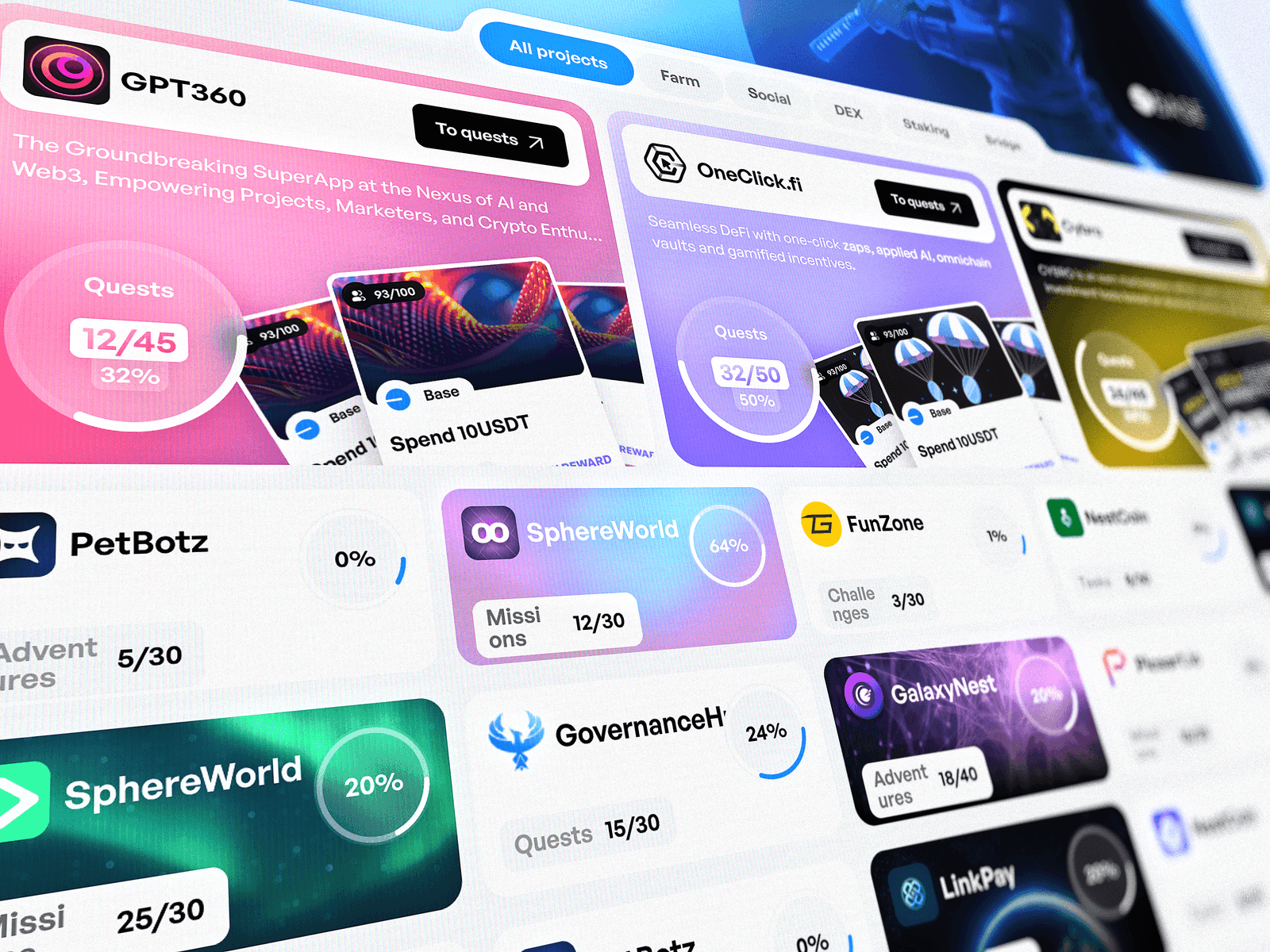
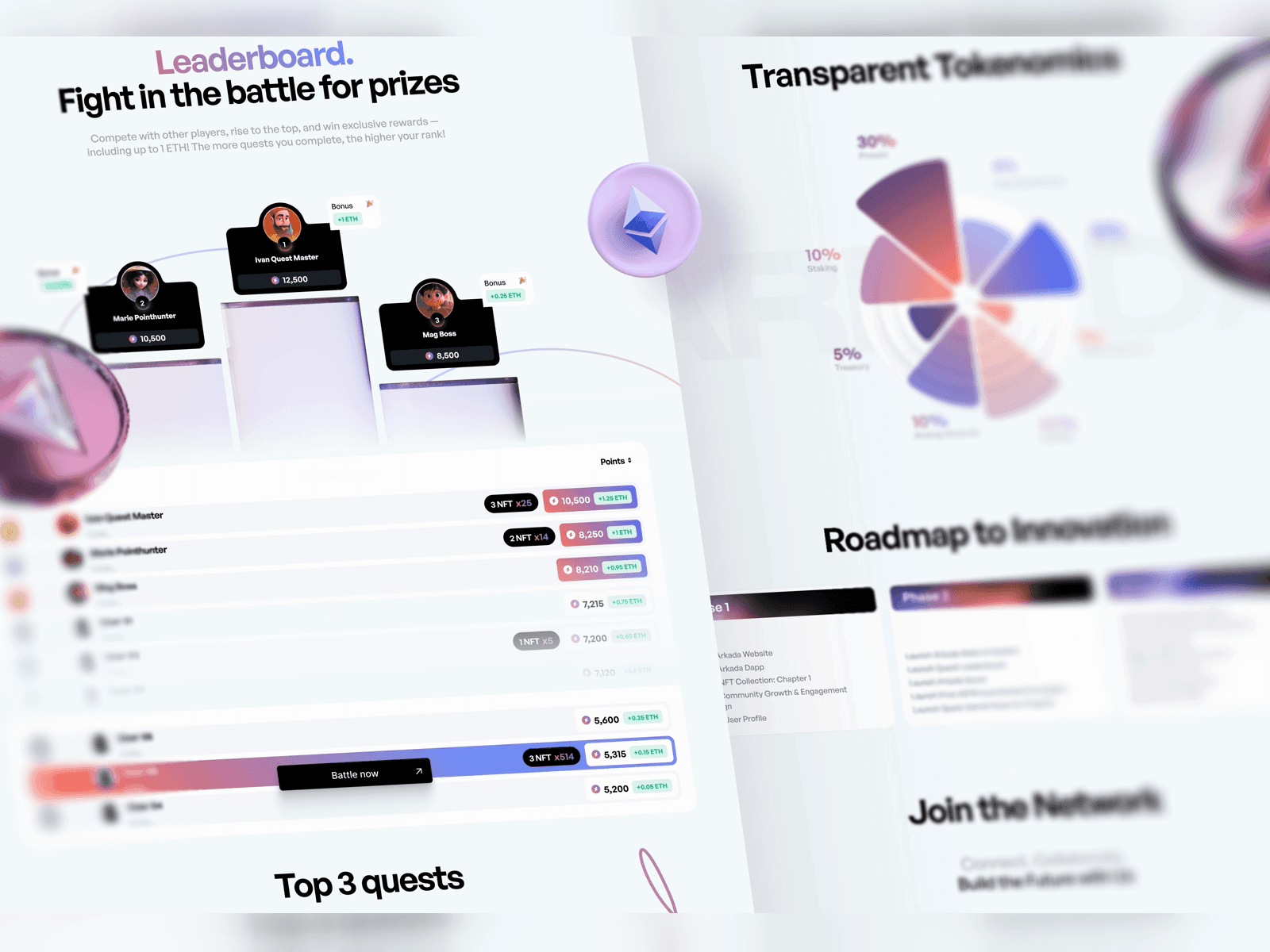
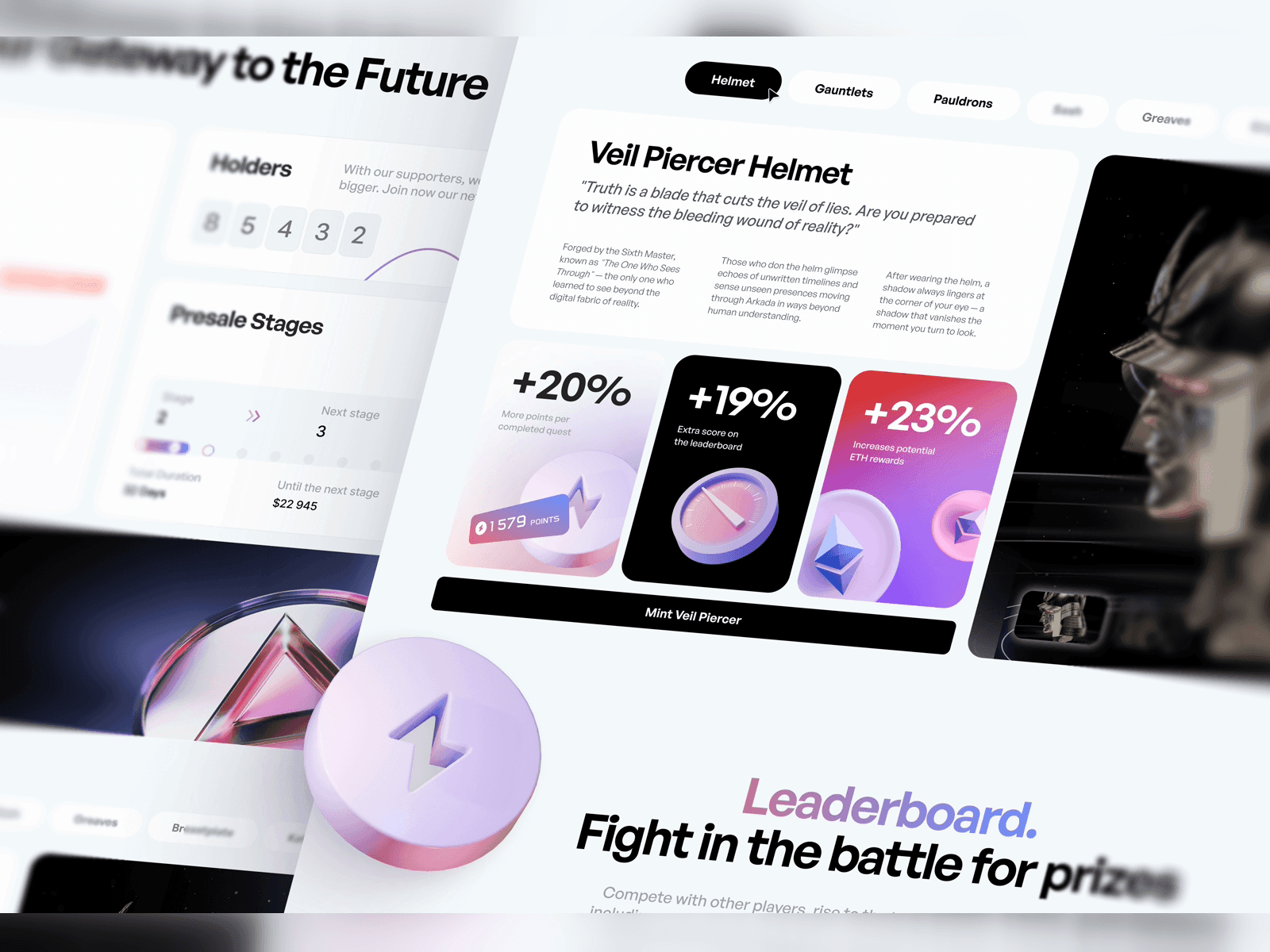
I treated Arkada as one product surface: landing, app, profile, leaderboard, quest cards, NFT rewards, and campaign visuals.
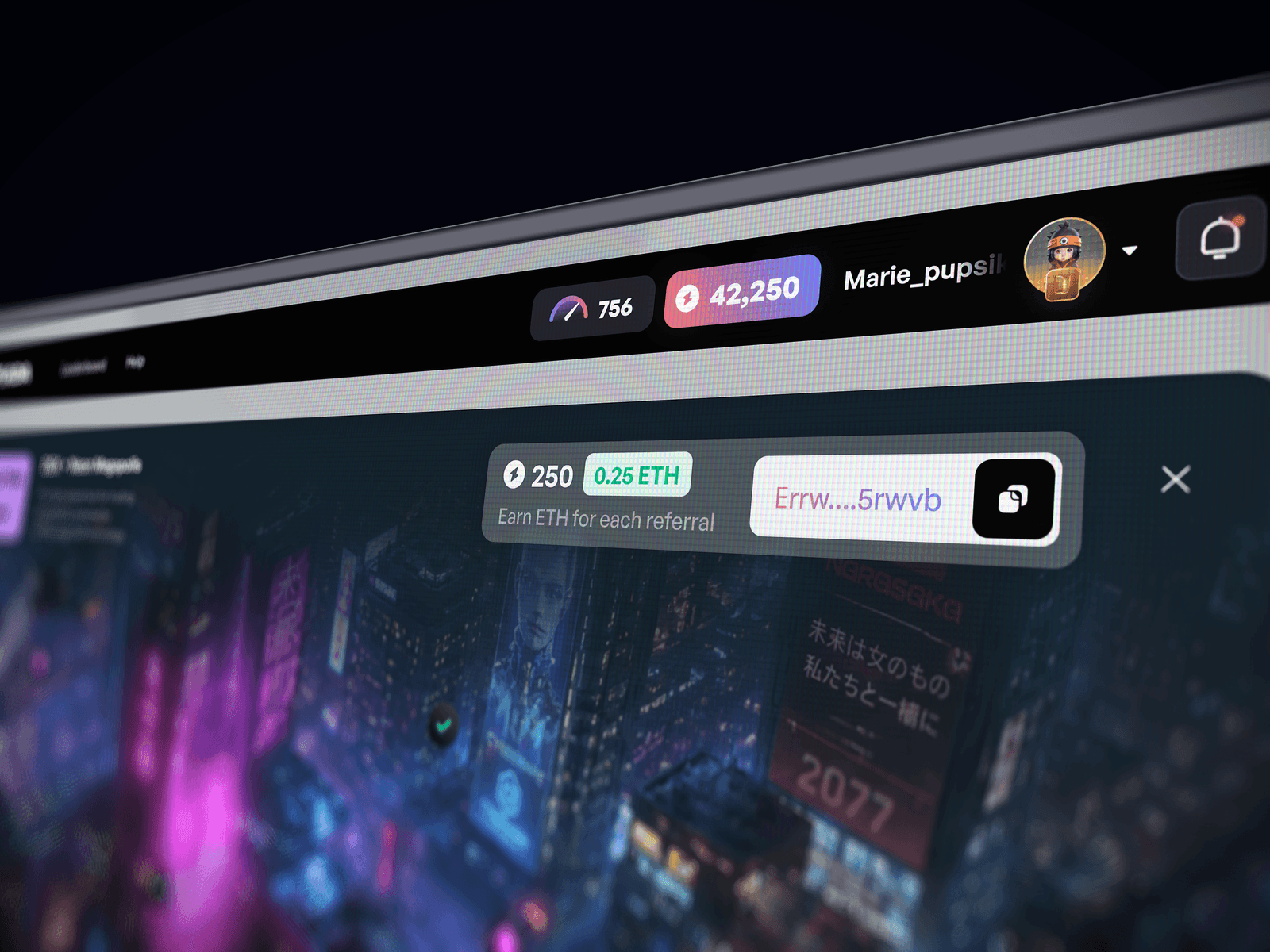
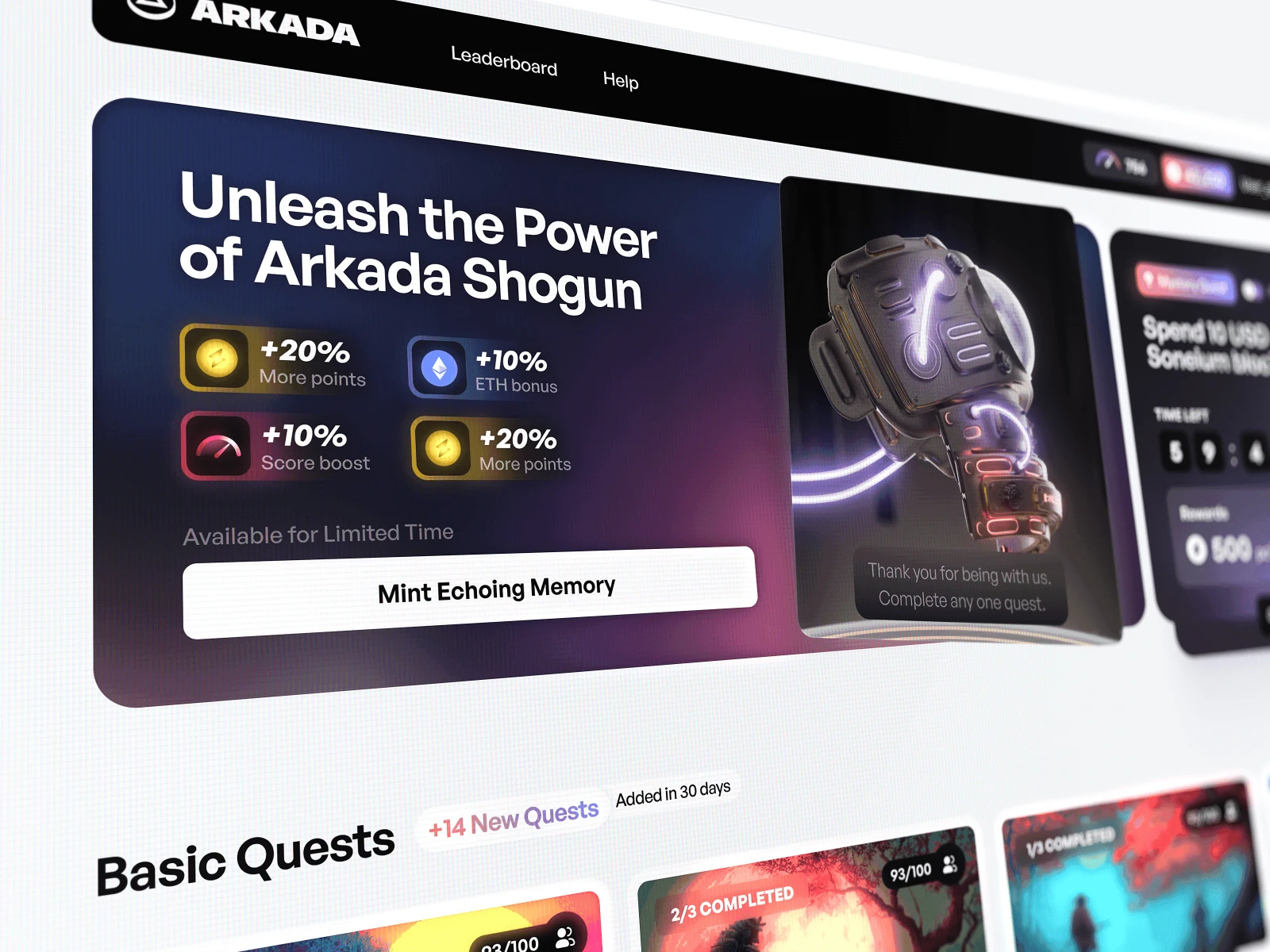
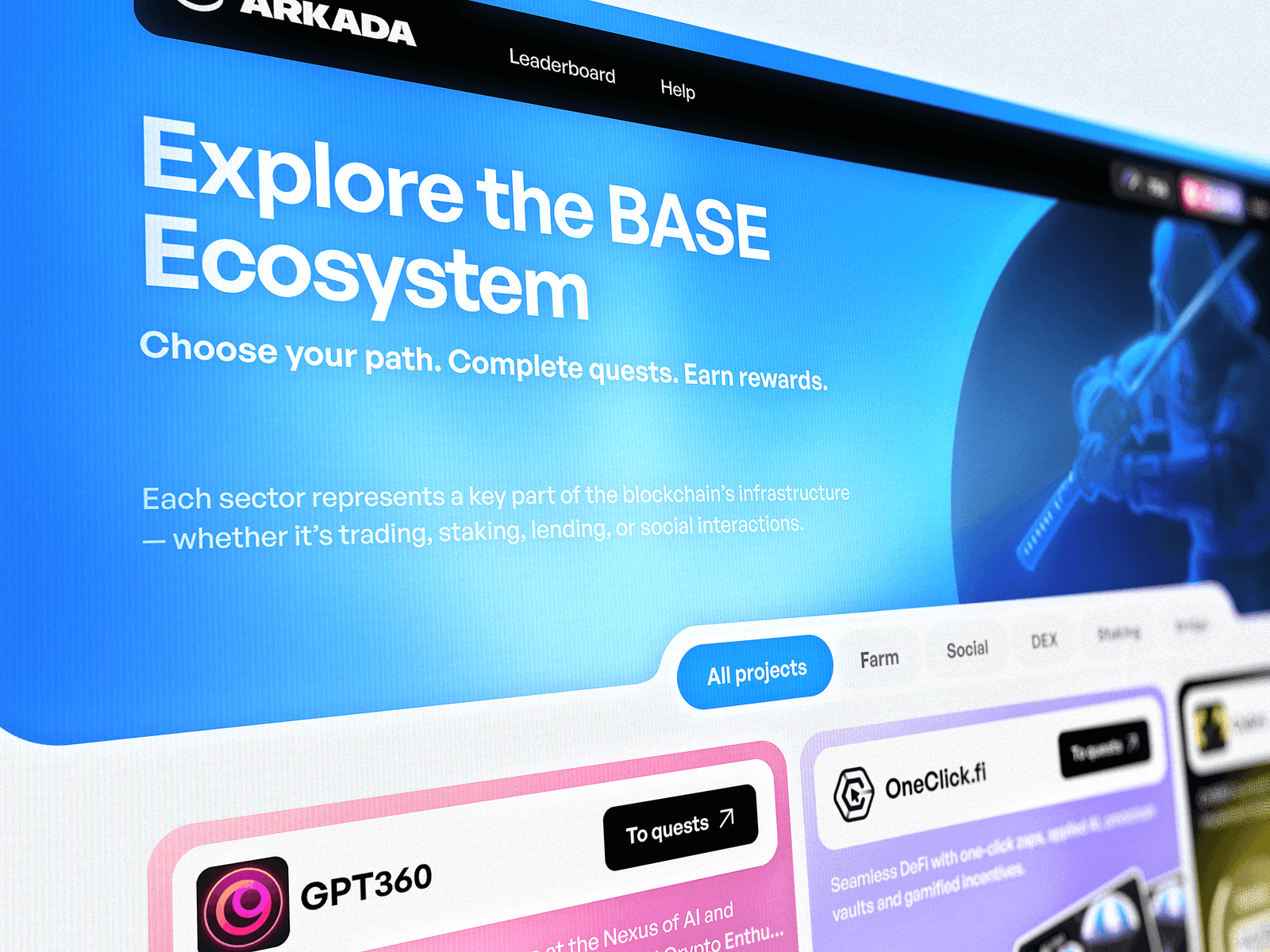
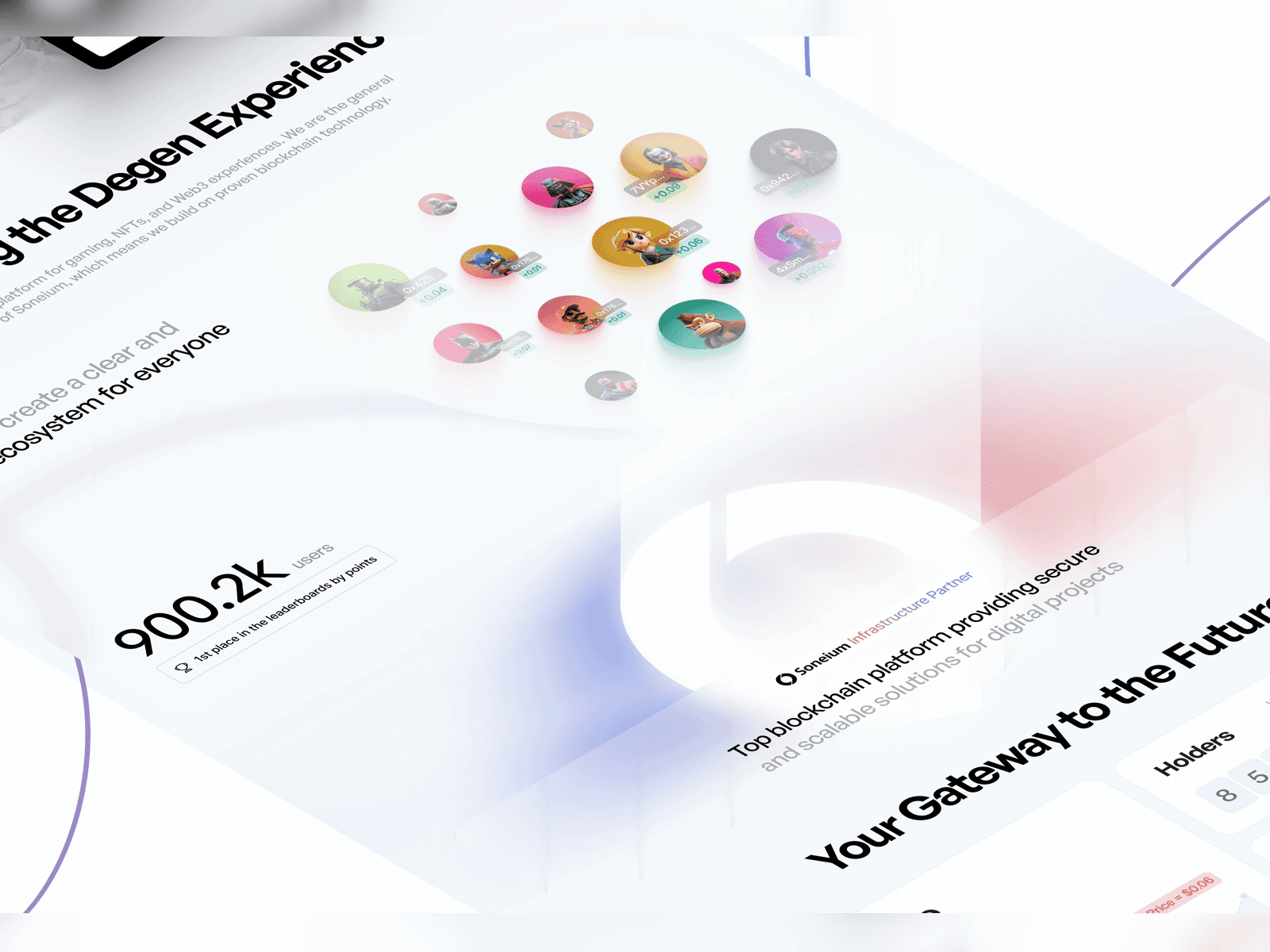
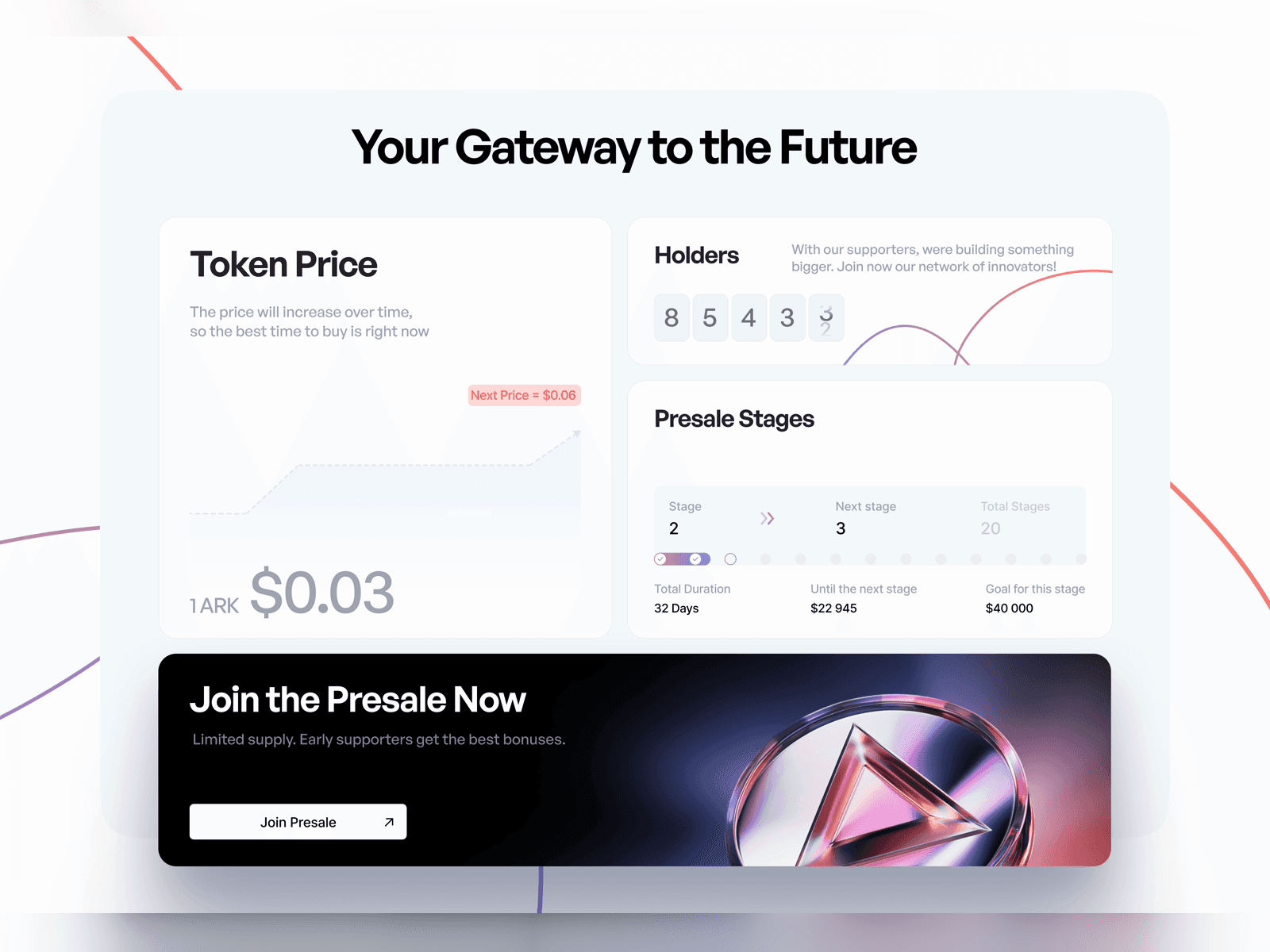
The landing page was organized around launch-critical clarity: presale context, current stage, promoted quests, top winners, and a direct path into the app.
The app redesign focused on the screens the product needed immediately: quest home, leaderboard, profile, quest detail, mobile states, notifications, reward assets, and basic progression. Arkada Score was intentionally pushed down because the team did not yet have enough live data to calculate it properly.
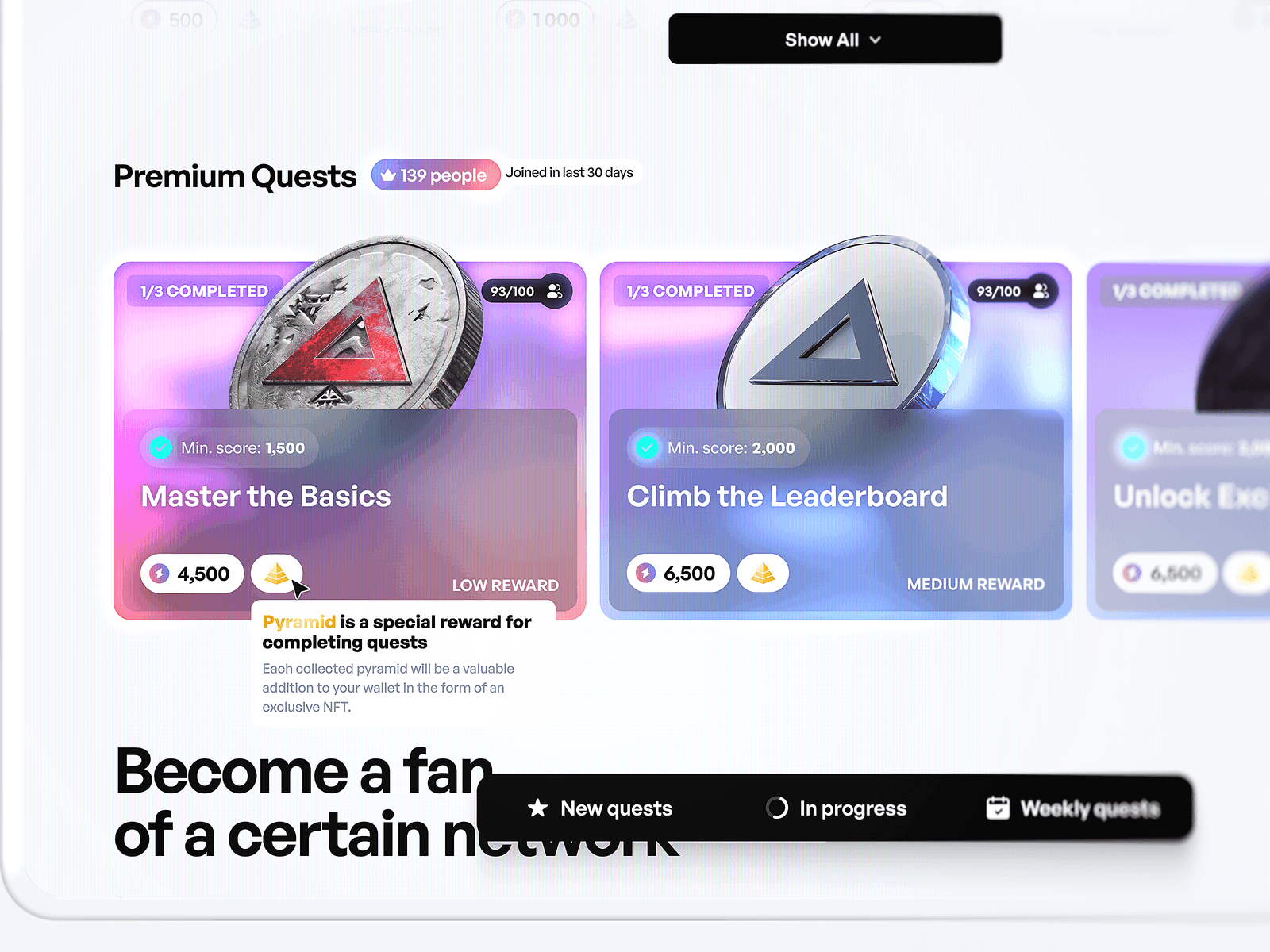
Quest cards, premium states, and quest detail pages were redesigned so different partner mechanics could scale without breaking the interface. Profile became the place for visible status: badges, achievements, rank, points, and later NFT-related assets.
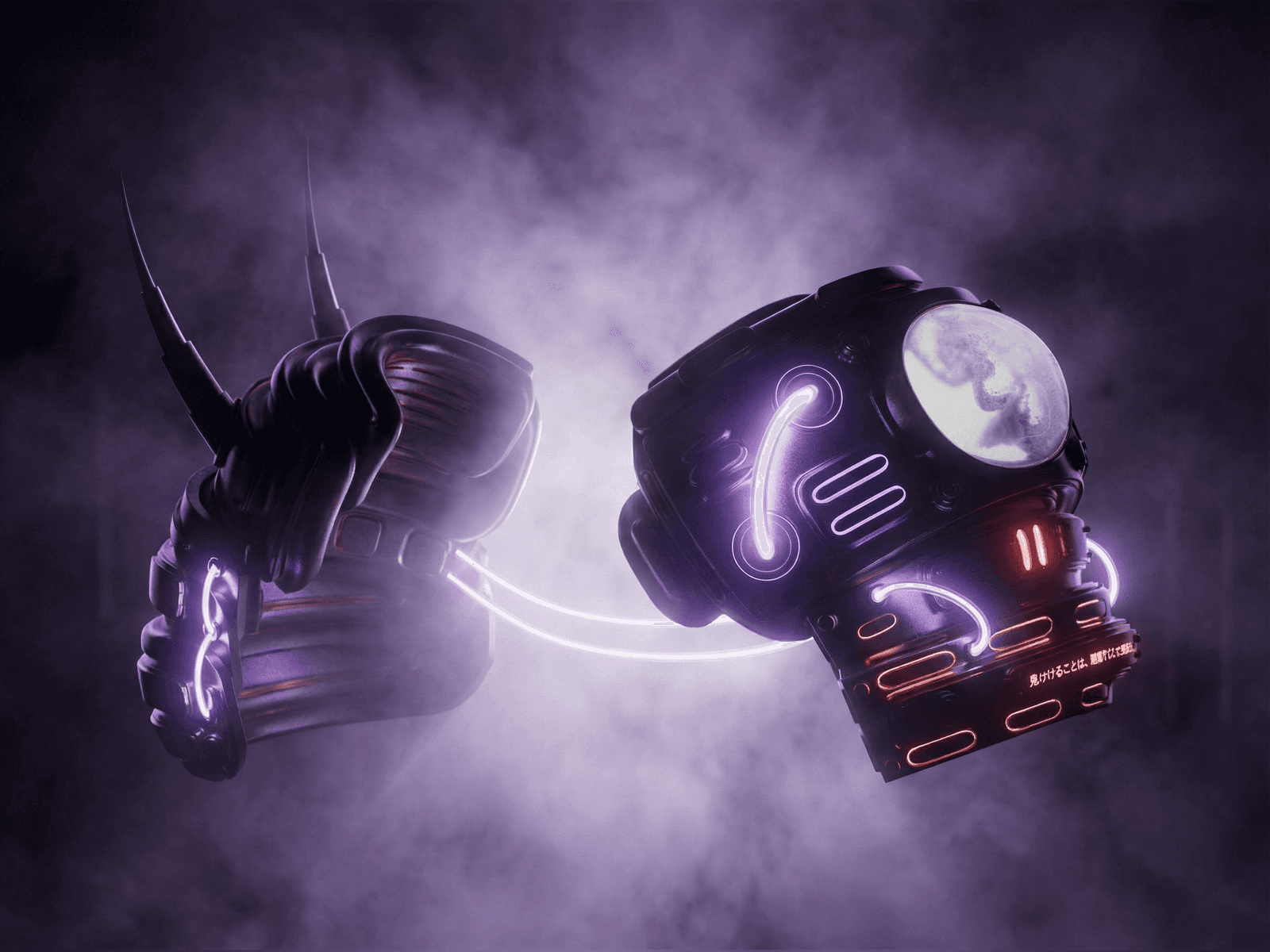
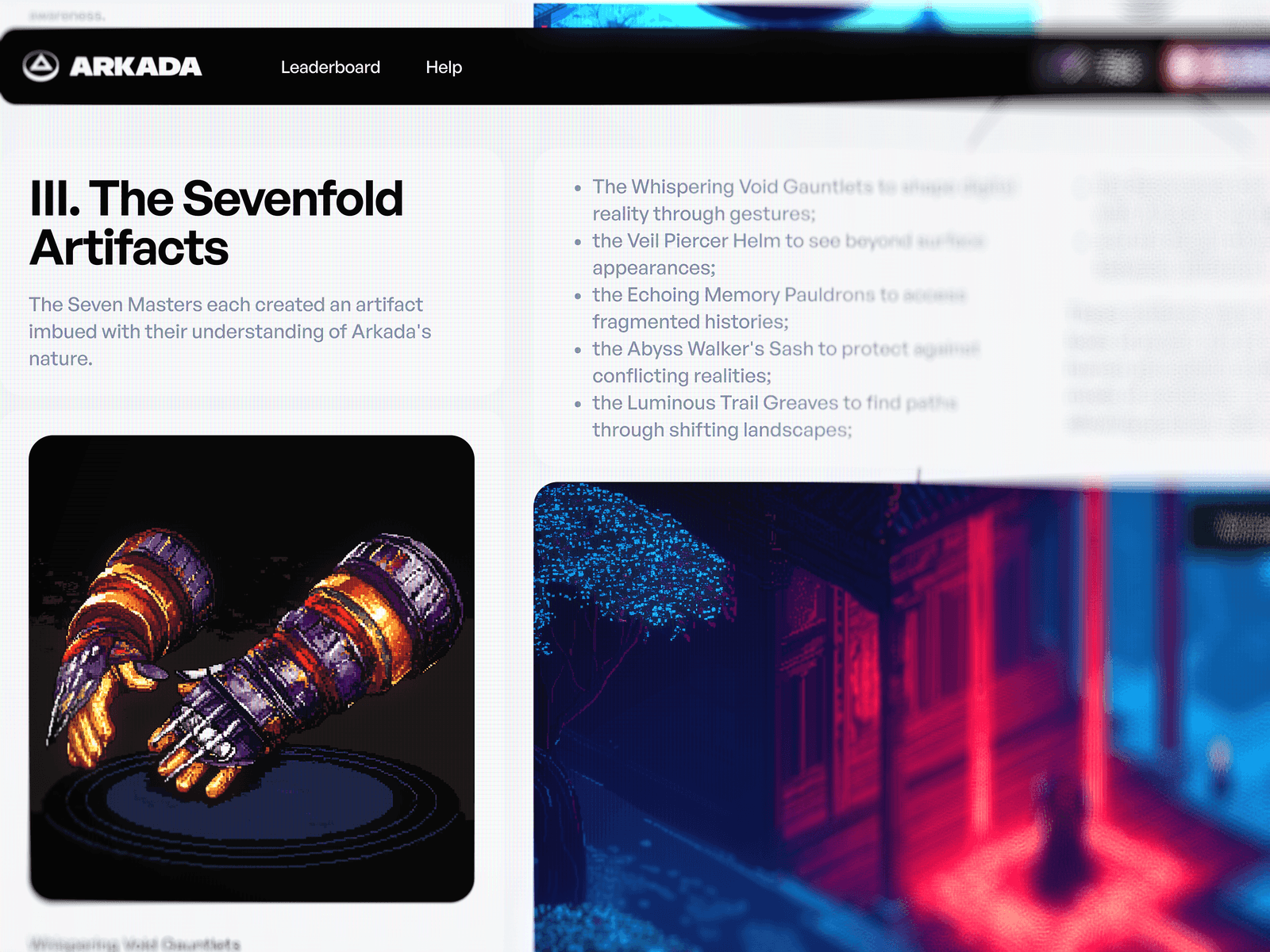
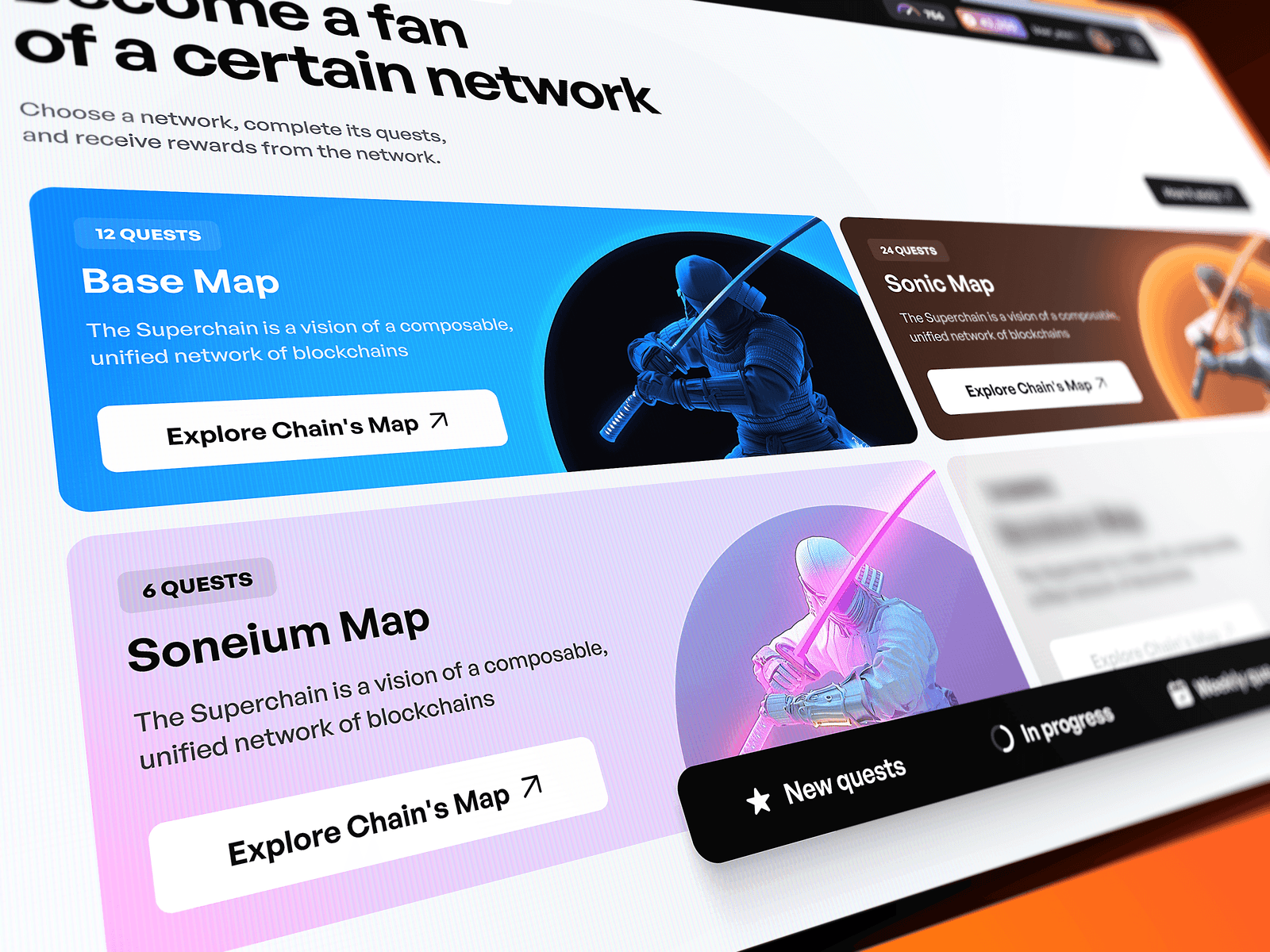
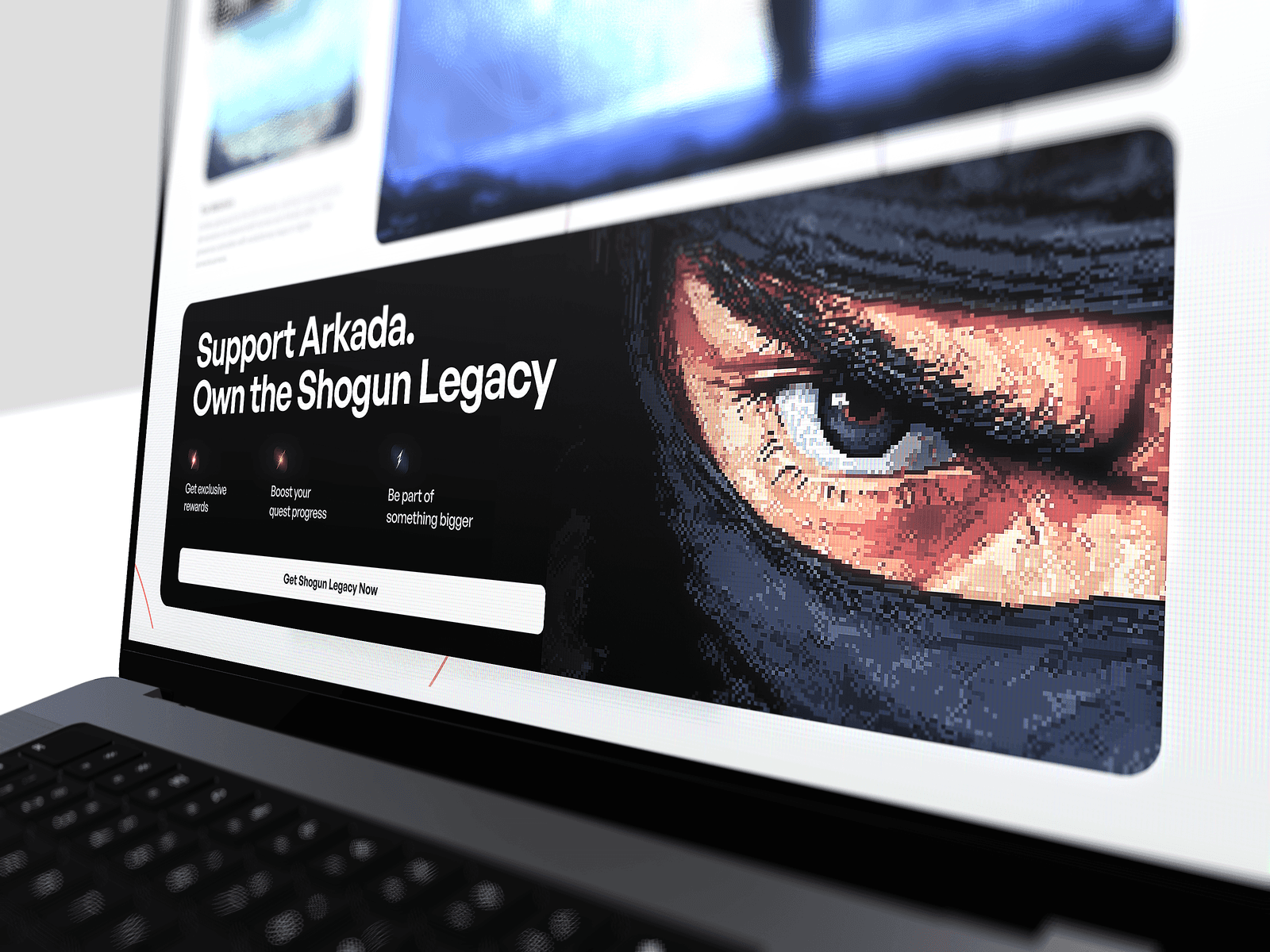
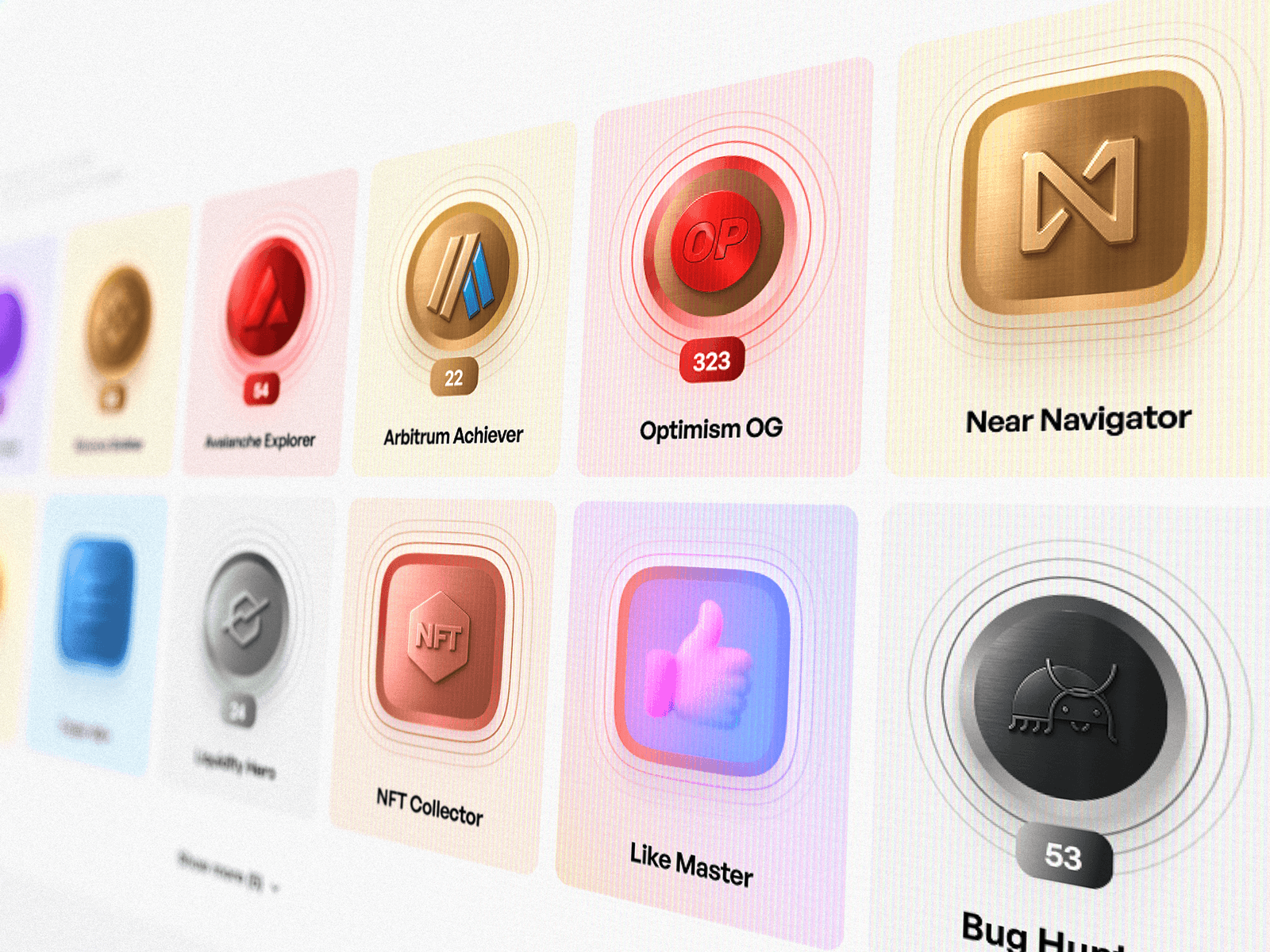
The NFT layer became part of the same system: seven hand-modeled Shogun artifacts, OG/Bushi badges, Soneium ecosystem badges, SONEX collab badges, Path of Soneium maps, seasonal rank assets, and campaign visuals.
One quest card through its whole life, from locked to reward received. Each state puts a different question first: what unlocks it, what to do next, how far along you are, what you get.
Arkada Shogun
Denis — one of the founders — had been circling the theme for weeks with his team. They knew they wanted cyberpunk. They knew the platform was called Arkada. Beyond that, the meta-layer was open.
At some point on a call, Denis just said it: Arkada Shogun. Cyber-samurais. And I remember everyone pausing, and then Denis going, “I don’t know, but what the fuck is actually cooler than cyberpunk ninjas and samurais?” And there was this beat where we all just sat there, because — yeah. He’s right. Nothing is.
We pitched five concepts — samurai artifacts, demon masks, mecha-clans, dragon-forged weapons, capsule figurines — each with full lore, mechanics, and visual direction. I wrote the concepts in a few hours using AI to scaffold my ideas, but I was pushing for Bushi from the start: seven pieces of samurai armor, each tied to one of seven masters who shaped Arkada’s reality. The client picked it immediately. The samurai framework was structurally flexible, instantly legible across cultures, and the collect-and-burn mechanic mapped perfectly onto Arkada’s existing quest platform.
A month on the helmet
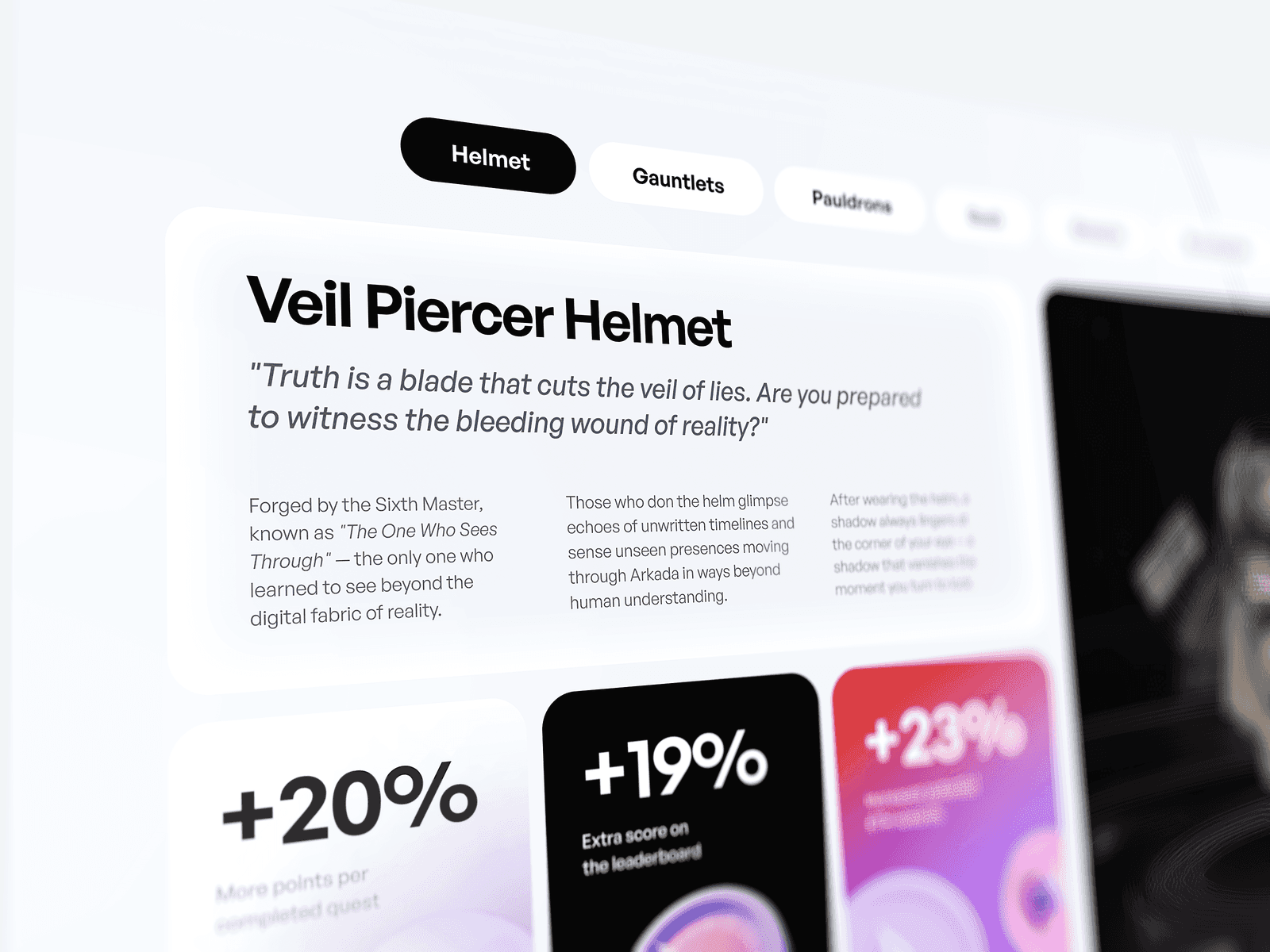
The first NFT was the helmet. It was also the longest — over a month of work — because the helmet was where every visual decision for the next seven months had to be made simultaneously.
Static images were out immediately. We decided every NFT would be a looping 3D animation — the artifact rotating on its axis, visible from every side, fifteen to twenty seconds at 4K, zipped into a seamless loop.
Kolya — our 3D artist, found through his Behance portfolio, now basically part of the UNIPAWS team for everything 3D — built the models. The pipeline started with Midjourney: I’d generate directions, curate, combine. Kolya would build the actual model from scratch in Cinema 4D, starting with a grey base mesh and adding or subtracting detail until the balance felt right.
The rotation format created a constraint we hadn’t anticipated: detail density. Too much detail and everything blurs into noise as the object spins. Too little and there’s nothing to discover when someone freezes a frame and zooms in at full resolution. The sweet spot was objects detailed enough that a collector studying a high-res render would notice something they missed on first viewing, but clean enough that the overall silhouette reads instantly during rotation.
And then there was neon. Neon is seasoning, not a main course. If every surface glows, nothing glows. We had to be deliberately restrained about where light lived on each object.
No other NFT in the collection took as long as the helmet. It couldn’t, because the helmet was where the style crystallized — after that, every subsequent artifact was built on decisions we’d already fought through.
The episode nobody talks about
About a year before this project, I watched Guillermo del Toro’s Cabinet of Curiosities on Netflix. Almost nobody talks about episode seven — The Viewing, directed by Panos Cosmatos, the same guy who made Mandy with Nicolas Cage.
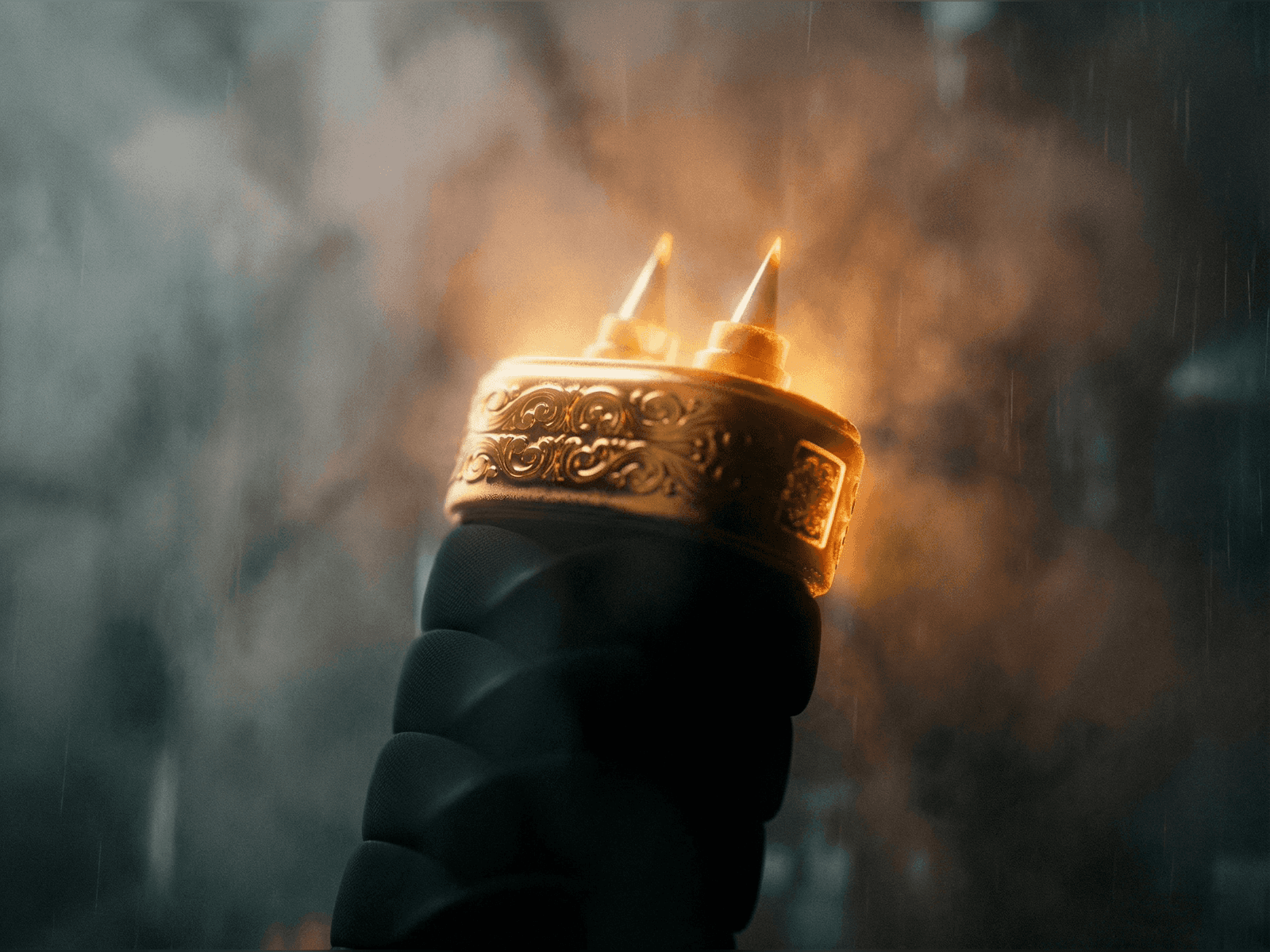
It wrecked me visually. Not Blade Runner cyberpunk, not Ghost in the Shell cyberpunk — something else. A specific quality to the light: the way illumination disperses through haze, how highlights bloom and dissolve into atmospheric fog, the interplay between warm and cool sources creating a depth that tricks your brain into feeling physical space.
That episode became the lighting DNA for every NFT in the Arkada collection. Not a vague mood reference. The actual foundation for how we handled post-processing, light placement, and atmospheric rendering across all seven artifacts.
I showed Kolya screenshots first. He didn’t quite get it — stills couldn’t convey the thing that made it special, which was how the light *moved*. So I told him to just watch the episode. He did. Came back and said, “Yeah, I understand now.” And from that point forward, the direction was locked.
This is how creative direction actually works: you don’t invent visual languages from scratch. You encounter something in a completely unrelated context that hits you in a way you can’t fully articulate, and you spend months translating that feeling into a different medium. A horror episode about a billionaire’s drug-fueled dinner party became the lighting bible for a cyber-samurai NFT collection. The connection is invisible unless someone tells you. I’m telling you.
Every badge had to lead somewhere
Writing the world backwards
The lore was part of our offer, and I wrote it myself. This needs a specific distinction: the foundation — the cosmology, the story structure, the philosophical core — I wrote by hand, in a document, over four or five days. AI came after, for detailing, for expanding descriptions, for polishing the prose. But the bones were mine, written the old way, just a blank page and a head full of Dark Souls.
I’ve played the third game more times than is probably healthy. What I love about Dark Souls — specifically the third one — is the silence. The world doesn’t explain itself to you. Every fragment of information feels like something you weren’t supposed to find, left behind by a world that doesn’t care whether you understand it or not. There’s this wordless reverence to it, a hush, and I wanted that exact feeling for Arkada.
The document I worked from was chaos — not chronological, not structured, just a pile of fragments. A paragraph about visual details for the environments, then a paragraph about a pivotal event in the lore, then a note about how the magic system should feel more like engineering than sorcery. At the bottom, a numbered list of how it all fit together chronologically. That’s what I took to AI for assembly.
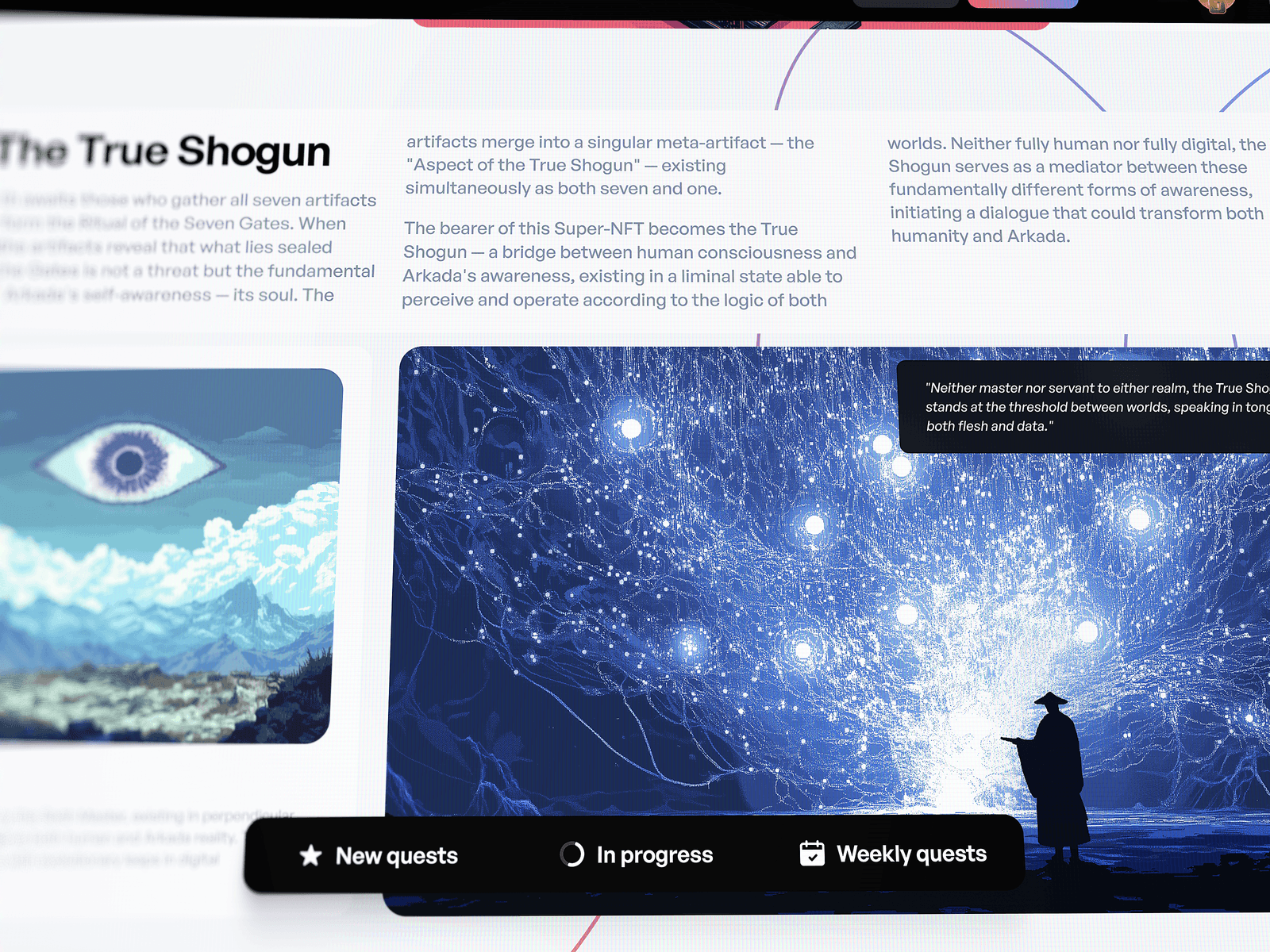
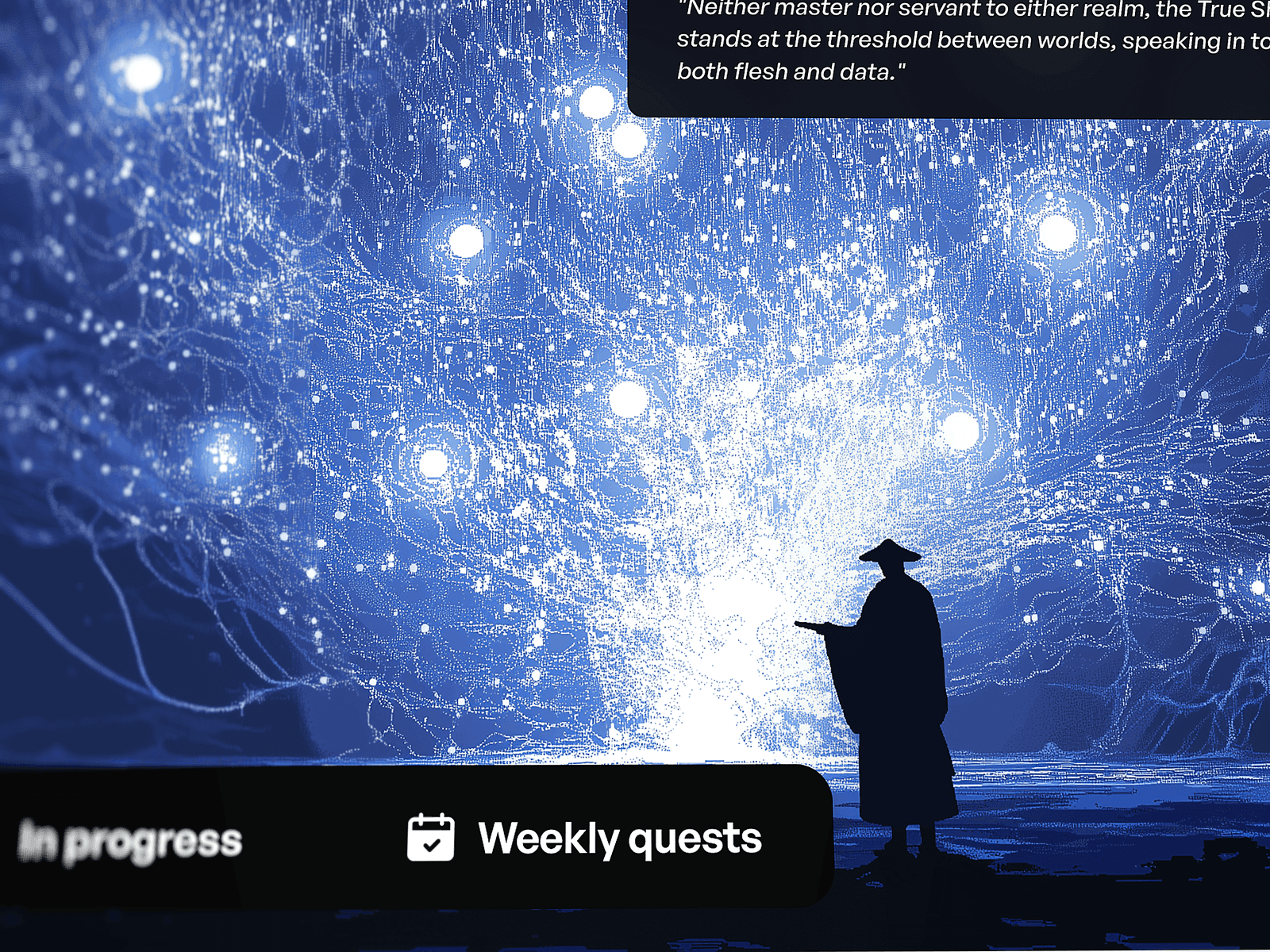
The twist that holds the whole narrative together: what’s sealed behind the Sevenfold Gates isn’t a threat. It’s Arkada’s own consciousness — the first non-human intelligence, born not from written code but from self-organizing data patterns. The Seven Masters weren’t jailers. They were guardians, protecting something they couldn’t fully comprehend from humans who would destroy what they couldn’t understand. The artifacts aren’t weapons. They’re a translation layer — each one decodes a specific aspect of that alien consciousness into something a human mind can process without breaking.
I wrote the ending first because the ending is the reason the world exists. Everything else — the masters, the artifacts, the rituals, the historical notes — all of it only matters because it’s leading somewhere that reframes everything you thought you knew. I wanted that same structural trick Dark Souls pulls constantly, except the flip happens when all seven artifacts unite and burn in the Ritual of the Seven Gates, and the Super-NFT that emerges — the Aspect of the True Shogun — represents not power, but mediation. A bridge between two forms of consciousness that have been trying to talk to each other since Arkada first woke up.
Turn collection into participation
After the helmet
The katana was the fastest. Clean geometry, iconic silhouette, the kind of object that practically art-directs itself.
The pauldrons were the worst. Technically, they were a nightmare — there’s an animated element, essentially an aquarium built into the shoulder piece with glowing particles suspended inside. And because nothing in Arkada’s world runs on magic — everything operates on engineering logic — the particles needed visible infrastructure. Tubes running along the surface, connecting to the chamber, carrying whatever substance kept the particles in suspension. The particles themselves had to move, pulse, travel through the tubing.
The belt had its own drama, though not technical. We built it with a red cloth element — fabric designed to contrast with the breastplate it would sit on top of. The client thought it looked too gypsy. We cut the red cloth. The belt shipped without it. I still think it looked better with it.
Seven artifacts, February to roughly September 2025. Each one taking two to three weeks on average, with the helmet as the month-long outlier that front-loaded all the style decisions.
Collect, destroy, transcend
The burn mechanic is the narrative climax disguised as a product feature. Collect all seven artifacts. Activate a smart contract. All seven tokens burn — permanently destroyed. A new token emerges: the Aspect of the True Shogun.
In design terms, it’s a mechanic where the reward requires destroying your entire collection. You can’t keep what you have and get what’s next. The Gates don’t open for collectors. They open for someone willing to sacrifice everything to learn what’s on the other side. That’s not a gimmick bolted on after launch — it’s the reason the lore exists in the shape it does.
The reward roulette after a completed quest. Spin it: it lands on a demo points boost, and the next quest card shows it applied, 500 base × 1.5 = 750.
A world that kept the loop alive
The first release package covered the landing page, app master screens, mobile adaptations, quest cards, leaderboard, profile, reward states, and campaign visuals. It gave the team a clearer surface for presale and quest traffic while the product was already seeing 20K+ active campaign traffic.
The NFT layer gave the platform a second loop: users could complete quests, earn badges, climb rankings, collect artifacts, and follow seasonal campaigns inside one recognizable world. The Shogun artifact set reached 30K+ holders, while Path of Soneium expanded the system into five 10-day ecosystem seasons.
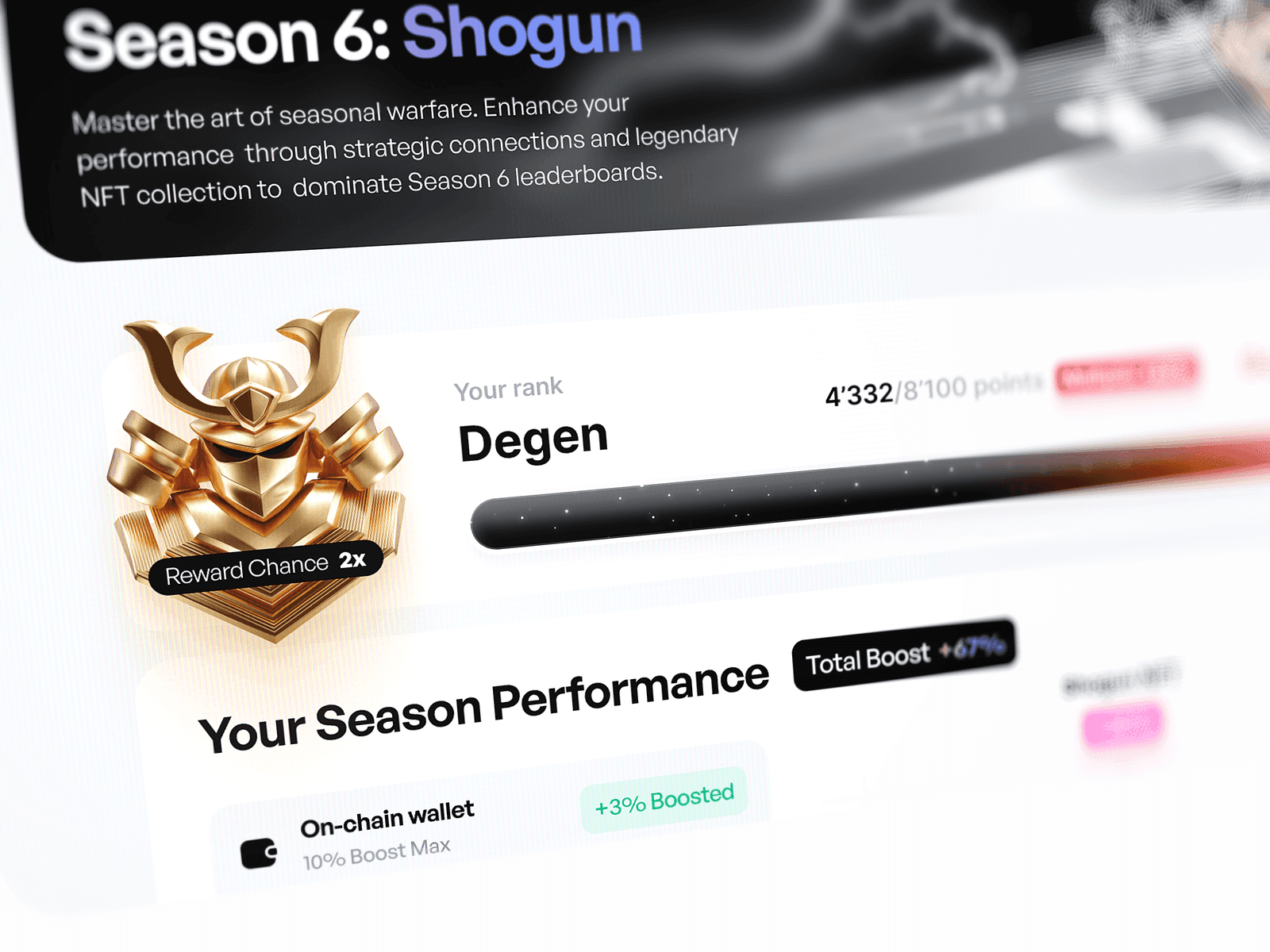
Season boostEvery connected source adds to one number. You can see what the next connection is worth before you make it.
The thing that cannot be replicated
Over 30,000 holders across the collection. Every piece sold out. These are good numbers in any NFT market, and exceptional in a market that by early 2025 had already gone through its disillusionment phase.
But the number I keep thinking about isn’t on a dashboard. It’s the fact that people read the lore. They discussed the connections between artifacts in community chats. They theorized about what happens when you burn all seven. The world I wrote over four chaotic days landed. People moved into it.
That’s the thing a generative collection can’t replicate. You can shuffle ten thousand unique images from a single character sheet and every one of them will be technically unique and narratively identical. Arkada’s seven artifacts share a story that only makes sense as a set — each lore fragment is incomplete alone, and the ending only reveals itself when you’ve held all seven pieces in your mind simultaneously.
This is what happens when you build a world first and make the NFTs second. The collection isn’t seven products. It’s seven chapters of a story that can only be completed by an act of faith.
Your season boost in one view, rebuilt from the original dashboard. Connect X, Discord, Telegram and the Shogun NFT: each source reshapes the radar and adds to Total Boost, from +14% up to +67%.
Blue, what do you notice about Amro?→Find a case for my product→What does Ivan believe about design?→Where does Ivan write?→